7 things that will change brick-and-mortar retail in 2026

Trends are one thing. What matters is how they actually change everyday business – in category management, on the shop floor, in marketing and in day-to-day operations. This article translates key developments into concrete implications and shows which levers you can already pull today.
The following seven points are not abstract future scenarios. They are changes that have already begun and will reach the mainstream in 2026. For each development, you will find a concrete recommendation that can be implemented without big budgets or lengthy IT projects.
1 POS data becomes the basis for decisions
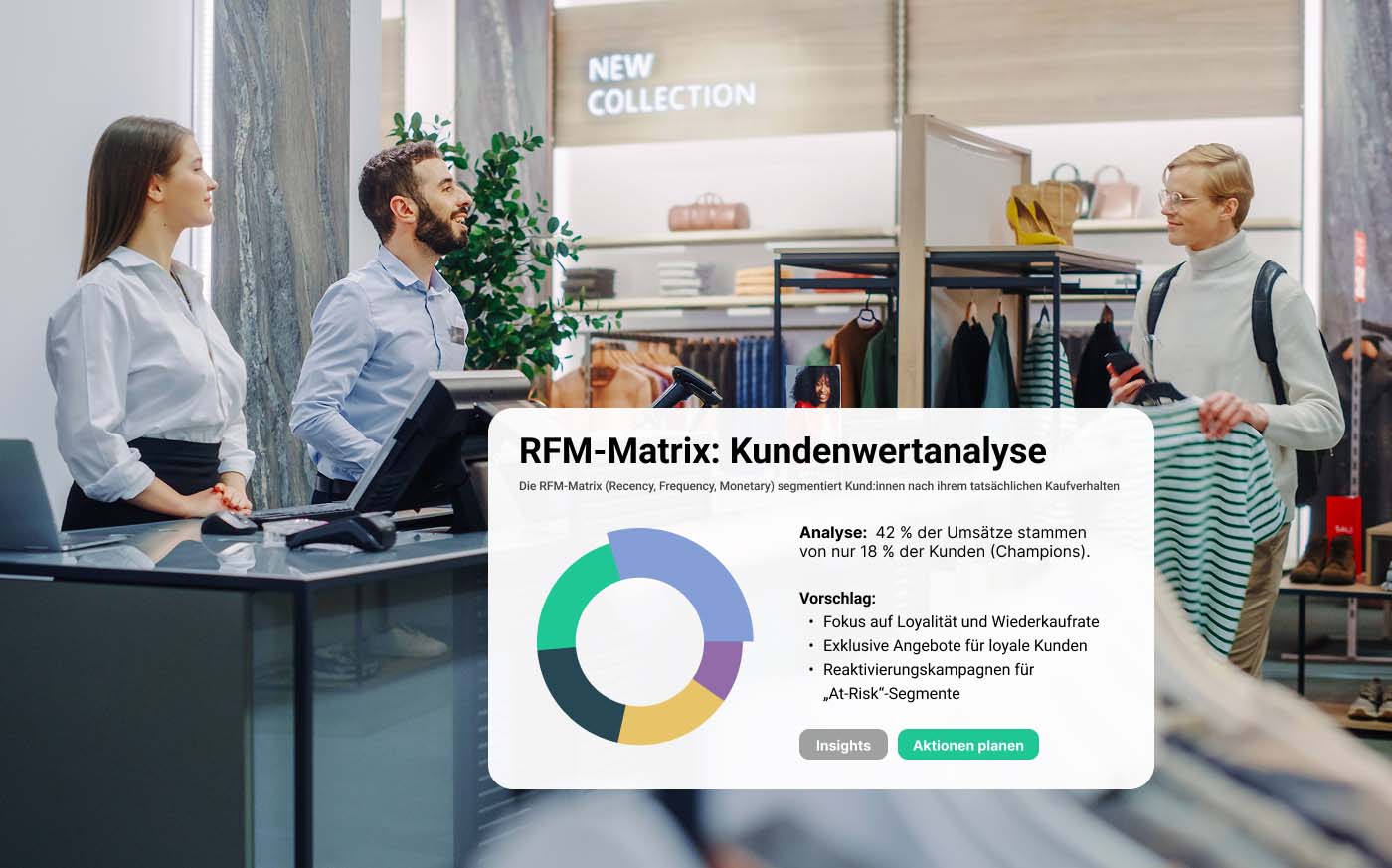
Every transaction at the checkout tells a story. Which products are bought together? At what times of day do certain categories perform? How does buying behavior change over weeks and months?
For a long time, these stories went untapped. POS data was stored but barely analyzed. That is now changing fundamentally. Modern analytics and Purchase Intelligence solutions make this data accessible without the need for a dedicated data team.
Example:
Through market basket analysis, a DIY store discovers that customers buying laminate flooring forget the underlay in 45 percent of cases. This knowledge was previously invisible. Now it becomes the basis for targeted cross-selling measures.
How to act on it:
Ask your IT team for an export of the last twelve months of transaction data. Analyze the most frequent product combinations. Often a simple evaluation is enough to reveal the first patterns.
2 Personalization starts with the receipt
Personalized offers do not have to be complex. The simplest entry point is the receipt. The customer has just made a purchase, the basket contents are known and the receipt is guaranteed to reach the customer.
Digital receipts turn it into a personalized touchpoint. Instead of a static document, the customer receives relevant hints, recommendations or offers based on their purchase.
Example:
A drugstore chain displays a coupon for hair treatments on the digital receipt whenever hair dye is purchased. The redemption rate is 18 percent – well above traditional untargeted advertising.
How to act on it:
Check whether your POS system supports digital receipts. Define three sensible product combinations where a hint or coupon offers added value.
3 Assortment decisions become data-driven
Which products belong next to each other on the shelf? Which items block space without contributing revenue? Which category needs more room? For a long time, such decisions were made based on experience or gut feeling.
In 2026, assortment decisions are becoming increasingly data-driven. Market basket analyses reveal real purchase correlations. Sales data shows which products perform and which do not.
Example:
A fashion retailer finds that belts are bought together with jeans in 35 percent of cases – but only when both products are available at the same time. The belts are placed right next to the jeans. Sales rise by 40 percent.
How to act on it:
Pick a category with optimization potential. Analyze frequent product combinations and test a placement change in one store.
4 Manual reports disappear
How much time does your team spend on Excel reports, data exports and presentations? In 2026, this way of working is no longer up to date.
Modern analytics platforms deliver real-time dashboards. Questions about the performance of individual categories or time periods can be answered instantly – in some cases even in natural language via AI-powered queries.
Example:
A gas station operator uses Purchase Intelligence to analyze buying behavior and product sales. The monthly report used to take several days. Today, all key metrics are available at any time, including concrete recommendations for action.
How to act on it:
List all reports you produce regularly. Identify the most time-consuming ones. Check which of them can be automated.
5 Campaigns become measurable all the way to the checkout
Did a promotion actually generate revenue? How many customers redeemed a coupon? Which measure worked better? In online retail, these questions are standard. In brick-and-mortar retail, they often are not.
Digital touchpoints such as apps, newsletters and digital receipts create measurability right up to the purchase. Campaigns can be clearly attributed and compared.
Example:
A grocery retailer tests two coupon variants on the digital receipt. After two weeks, it is clear which variant performs significantly better. The insight feeds directly into the next campaign.
How to act on it:
Define clear metrics before a campaign starts. Make sure the technical infrastructure enables measurement.
6 Customers expect consistency across channels
An offer from the newsletter has to work in the store. Loyalty points have to count everywhere. Stock availability should match. Breaks in the customer journey are accepted less and less.
Customers expect a consistent experience across all channels. That requires connected systems and clean data.
Example:
A sporting goods retailer introduces a central customer profile. Purchase history is visible in the app, the online shop and the store. Sales staff can give more targeted advice, and satisfaction rises measurably.
How to act on it:
Test your own customer journey. Redeem online coupons in the store and document every obstacle.
7 Advertising becomes a revenue source for retailers
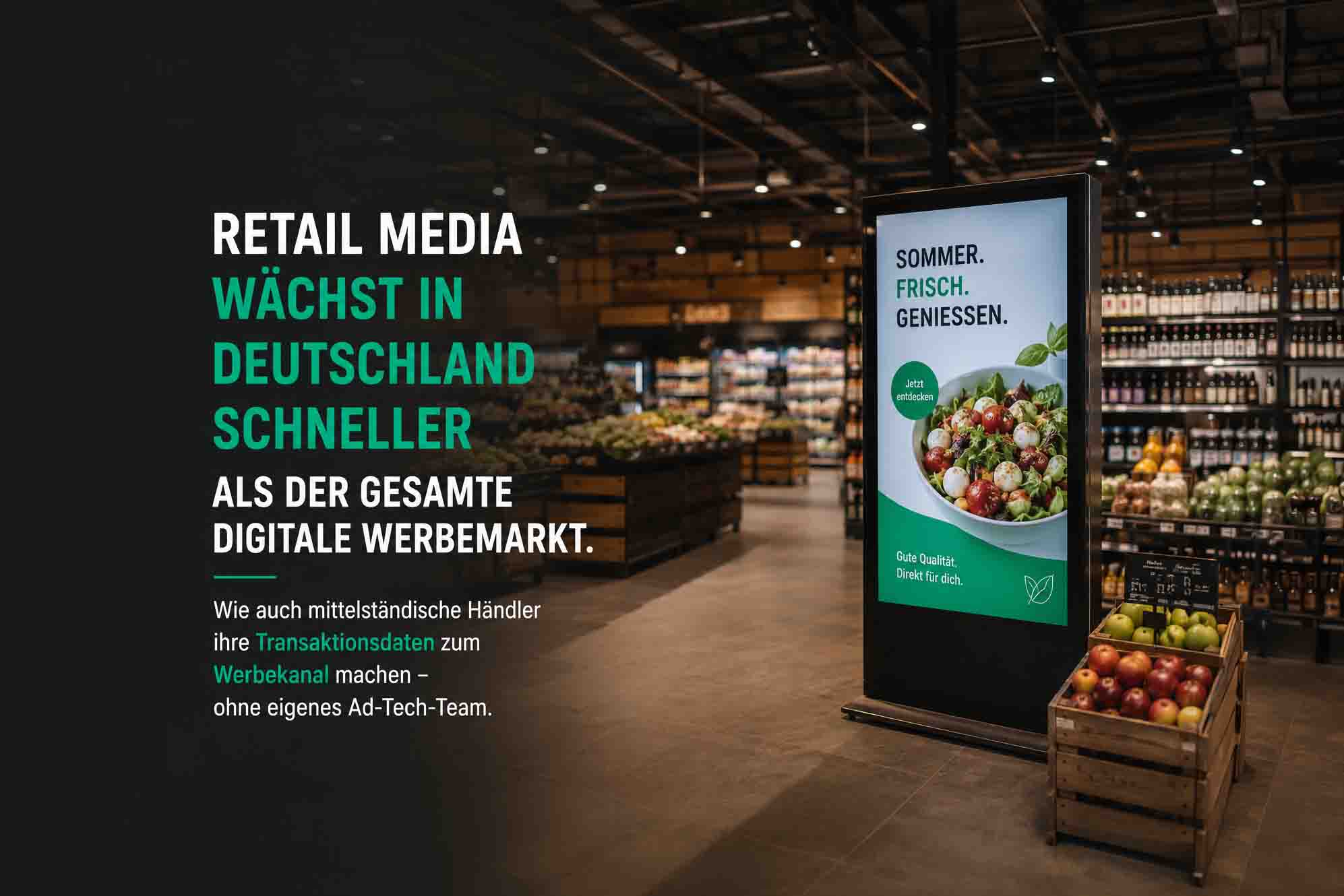
Retail Media is no longer a topic just for large platforms. In 2026, it becomes relevant for mid-market retailers as well. Brands are looking for proximity to the moment of purchase. Retailers own these touchpoints.
Whether digital receipts, newsletters or displays: many contact points can be monetized, creating new revenue streams with manageable effort.
Example:
A regional drugstore retailer offers brands placements on the digital receipt. Billing is per coupon displayed. The retailer gains additional revenue without additional operational burden.
How to act on it:
Identify brands interested in more visibility. Start initial conversations about possible placements.
Conclusion: small steps, big impact
All seven developments have one thing in common: the data already exists. What is needed is not large-scale projects, but the will to make better use of existing information and to test systematically.
The best time to start was yesterday. The second best is today.
Your checklist for Q1 2026
- Analyze the last twelve months of transaction data
- Check the technical feasibility of digital receipts
- Optimize one category based on data
- Identify and reduce manual reports
- Ensure campaigns are measurable
- Test your own customer journey
- Talk to brands about Retail Media
From trends to implementation
Many of the levers described here come down to one central question:
How can POS data be analyzed in a way that leads to concrete decisions about assortment, placement, campaigns and new revenue models?
This is exactly where Purchase Intelligence comes in. Instead of static reports, the solution analyzes real purchase transactions, identifies product affinities and basket patterns, and tracks developments over time. The result: clear answers to operational questions in brick-and-mortar retail.
Webinar on January 28: Purchase Intelligence in brick-and-mortar retail
We will show what this looks like in practice in our webinar on January 28.
Topics include:
- Which questions retailers can realistically answer from POS data today
- Concrete use cases from category management, campaign management and Retail Media
- How analysis works without a data science team
- Which quick wins can be achieved within the first few weeks
More about Purchase Intelligence
Purchase Intelligence from anybill makes POS data immediately usable. The platform analyzes transactions automatically, identifies relevant patterns in buying behavior and translates data into concrete recommendations for brick-and-mortar retail.
You can find more information at:
Weitere Blogbeiträge