Retail Media for mid-market companies: how every transaction becomes an advertising channel
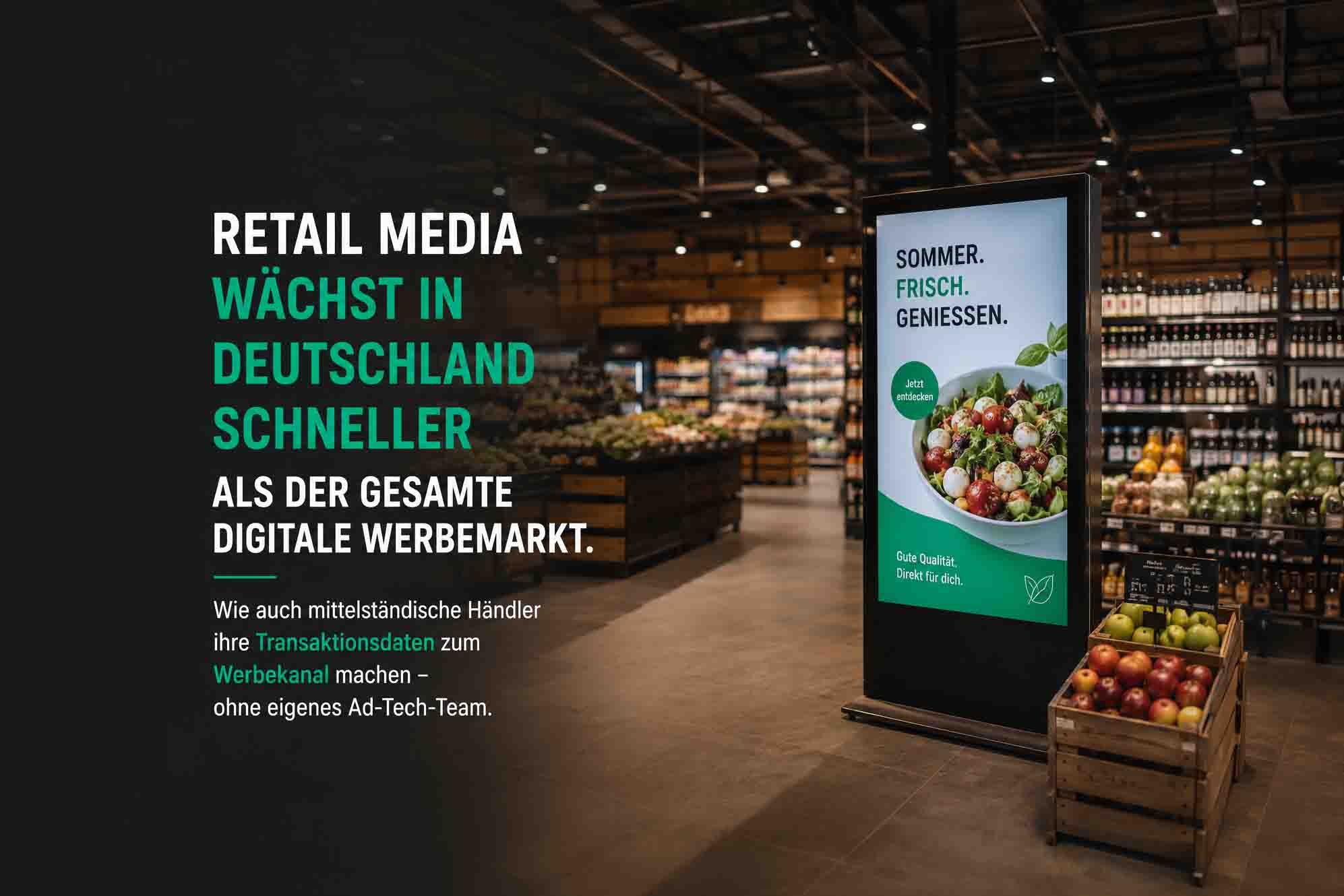
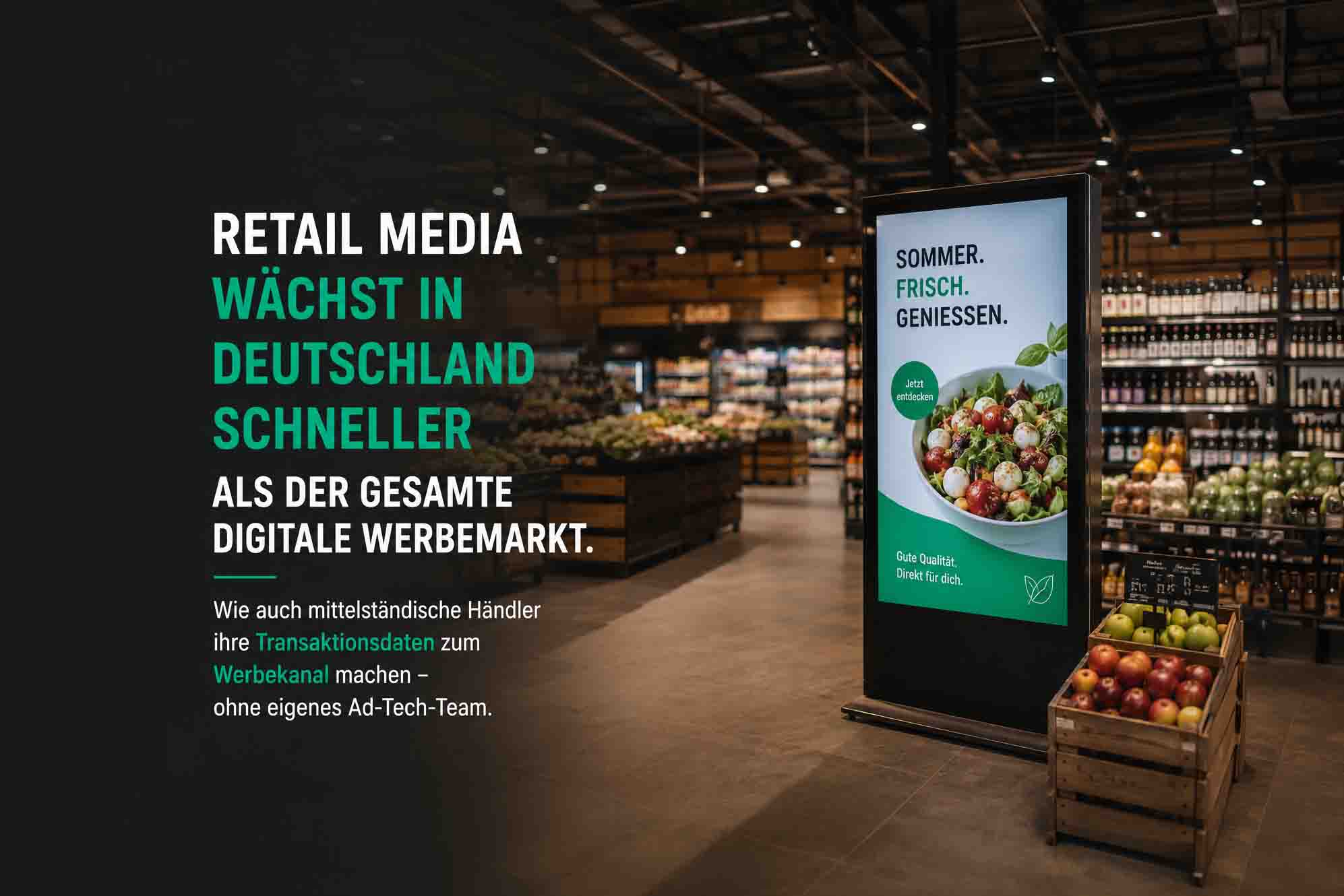
In 2025, Retail Media in Germany grew to around €3.3 billion in revenue – and thus significantly faster than the digital advertising market as a whole. While classic display advertising is stagnating, Retail Media grew at a double-digit rate. By far the largest share of this money still flows to a handful of major players: Amazon, online marketplaces, and the retail giants with their own media networks.
For mid-market retailers, it is easy to get the impression that the topic is a size too big. Their own ad tech, a team of data analysts, millions of transactions – all of that sounds like corporate logic. But the basic principle of Retail Media also scales down. Anyone who has customers has transaction data. And anyone who has transaction data owns the most valuable currency in today's advertising market: knowledge of what people actually buy.
What Retail Media means at its core
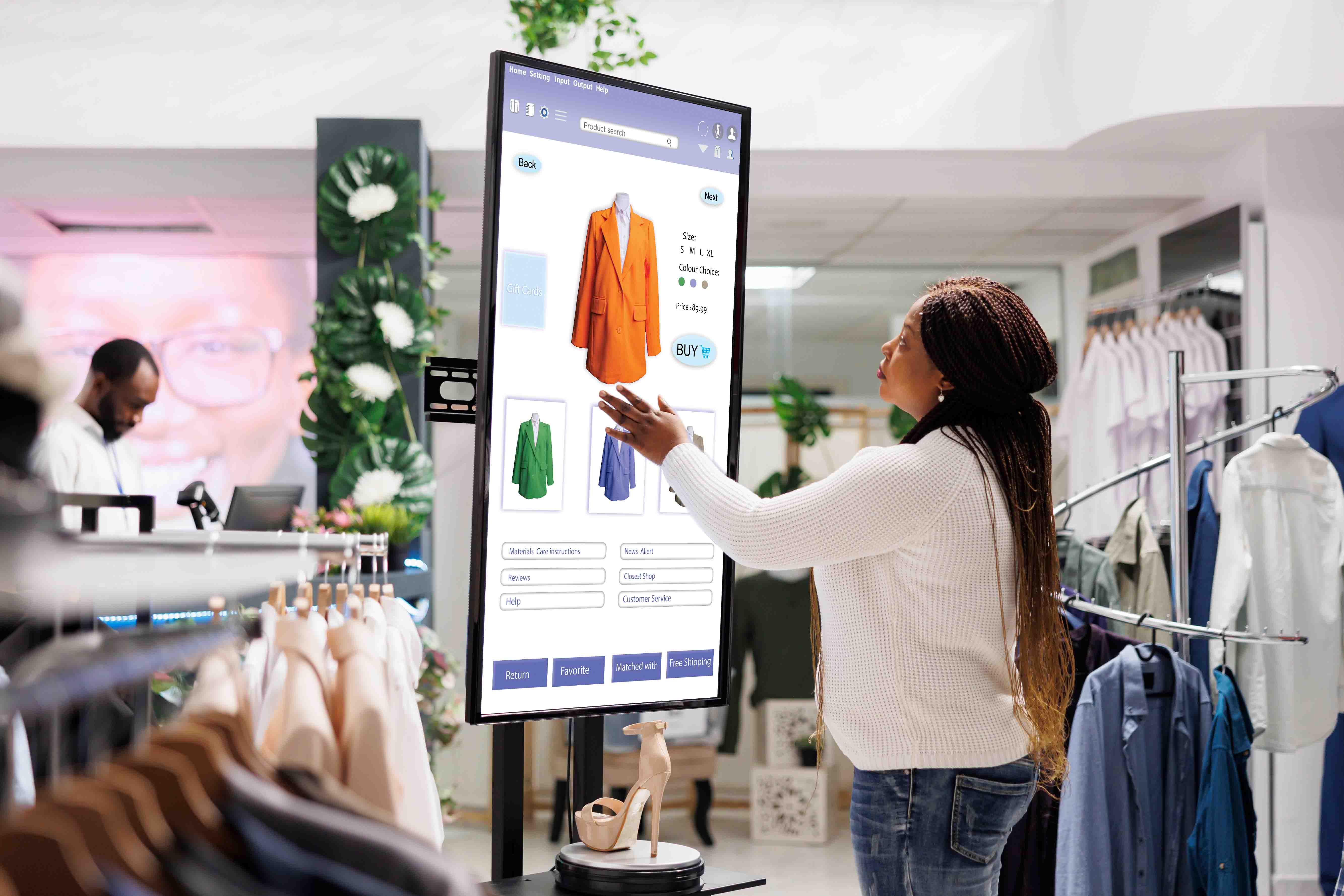
Retail Media describes advertising that a retailer serves on their own channels – and steers and measures with their own data. In the online shop, that means sponsored product placements. In brick-and-mortar retail, the spectrum ranges from displays at the shelf via the loyalty card app through to the digital receipt.
The decisive difference from classic advertising lies not in the ad slot, but in the data behind it. A brand that advertises with a retailer is not just paying for visibility. It is paying for access to real purchase data – and for the ability to trace advertising success through to the actual sale. Precisely this closing of the gap between ad contact and completed purchase is what makes the model so attractive for advertising brands.
Why the window is open right now
At European level, the volume is set to grow from around €14.4 billion (2023) to a projected figure of about €31 billion by 2028. The growth has long since stopped coming from online business alone. In-store Retail Media – advertising at the physical point of sale (POS) – is considered the next big field, but is still in an early stage of maturity.
That is the real opportunity for mid-market companies. The digital ad inventory of the major marketplaces is allocated and expensive. The physical touchpoints in brick-and-mortar retail, by contrast, are largely unused. Anyone who sets up first formats today with manageable effort occupies a field before the competition does. For many retailers, this is not an additional marketing project, but a new high-margin revenue source: the data and the space are already there, and the additional revenue falls almost entirely to the bottom line.
The building blocks of your own Retail Media offering
A working offering can be thought of in four layers – regardless of company size.
Reach: the touchpoints you already have
The first building block is reach to the customer. Mid-market retailers regularly underestimate how many contact points they already own: the store, the checkout, the newsletter, the app, the digital receipt. Each of these points is a potential ad slot. A drugstore with 40 stores and an active loyalty card base often reaches more relevant buyers through these channels than a broadly scattered poster campaign – only more precisely.
Data: the real value
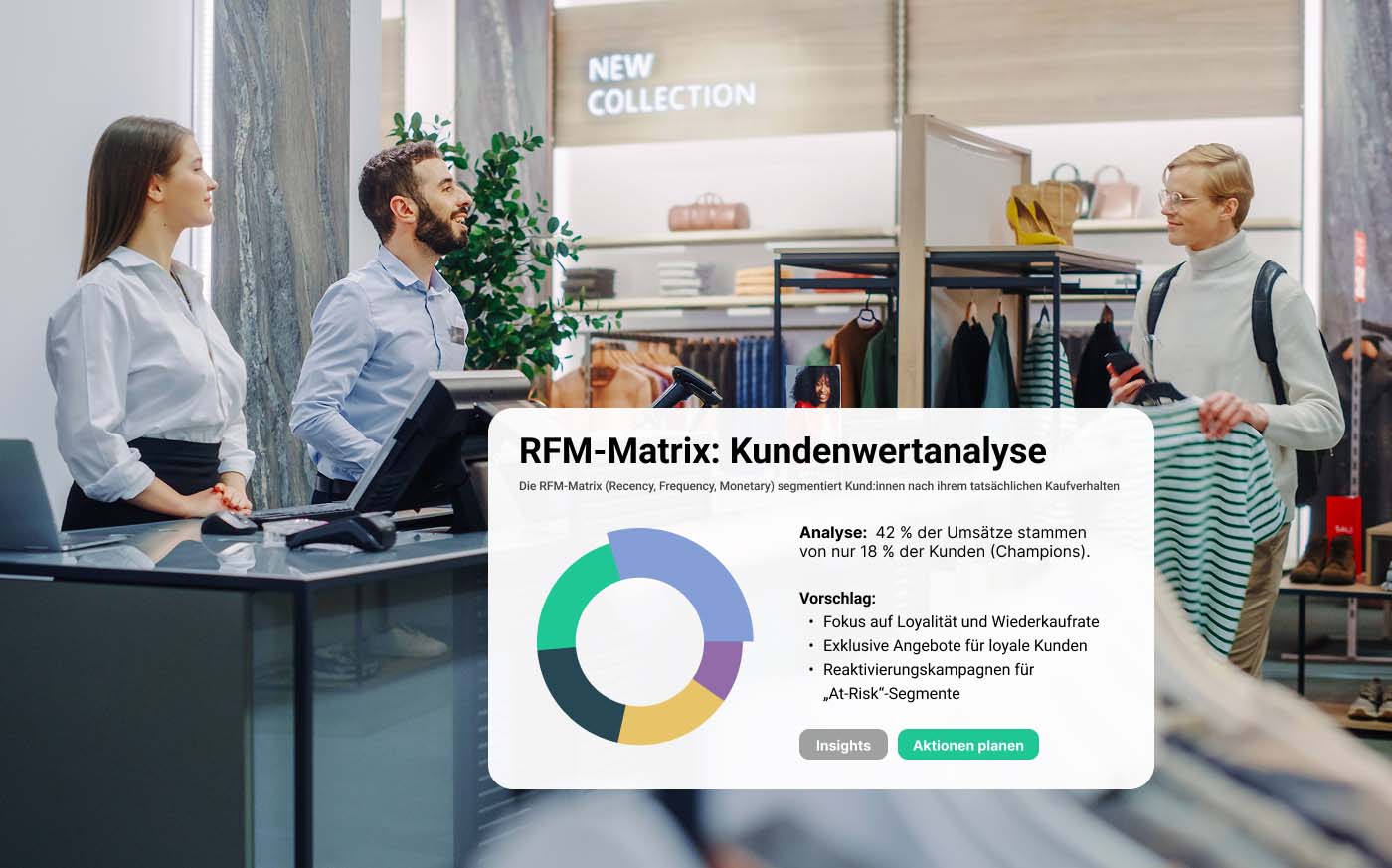
The second building block is first-party data. Transaction data shows who buys what and when. Segments can be formed from this without identifying individual people: buyers of a particular category, repeat buyers, occasional customers. A brand that wants to advertise its new care product is interested precisely in those who already buy comparable products. The retailer owns this knowledge – and no third party can take it away.
Inventory: from the receipt to the display
The third building block is the advertising inventory itself. This is where the pragmatic entry point for mid-market companies lies. A digital receipt, for example, is not just a receipt, but a guaranteed ad space after every purchase – served to a customer whose basket you have just seen. Cross-selling hints, coupons from the supplier brand or pointers to complementary products can be placed in context.
Measurement: the proof that it works
The fourth building block is measurability. It is the reason brands willingly pay for Retail Media. Anyone who can show an advertising brand that a campaign increased category sales by a concrete percentage is no longer selling reach, but results. Precisely this verifiability is what classic advertising formats lack.
The most common misconception
Many retailers believe Retail Media starts with selling ad slots. In fact, it starts with the data foundation. Anyone who does not have their transaction data in a structured form can neither form meaningful segments nor measure advertising success – and therefore has nothing a brand would pay for.
The second misconception concerns size. You do not need millions of data records to get started. You need relevant data and a clear use case. A regional grocery retailer that can show a beverage brand which of its customers regularly buy in the category has a sellable offering – even without national reach.
What retailers can do now
The pragmatic first step is an inventory of your own touchpoints and data. Which contact points with the customer exist? Which of them are digital and therefore controllable? Is transaction data available in a form from which segments can be formed?
In the second step, a pilot with a single supplier or a single brand is worthwhile. A clearly defined use case – for example a coupon campaign on the digital receipt for a particular category – quickly delivers robust numbers. Those numbers are the argument for expansion, internally and toward further advertising partners.
Outlook: the next advertising billion-euro business will be decided at the shelf
Retail Media is not a passing trend, but a structural shift in the advertising market. Ad budgets migrate to where impact can be proven – and that is increasingly retail itself. The major players have occupied the onsite space. The physical store, the moment at the shelf and at the checkout, is by contrast largely open.
For mid-market retailers, this is a rare constellation: a growing market in which their own, hard-to-copy advantage – proximity to the customer and knowledge of their buying behavior – counts more than the largest advertising budget. The window is open. It will not stay open indefinitely.
Turning transaction data into advertising value – with Purchase Intelligence
Purchase Intelligence connects to your POS system and turns transaction data into the foundation for your own Retail Media offering: structured segments, contextual delivery on the digital receipt and measurement of advertising success through to the sale. No in-house ad-tech team, no months-long implementation.
To learn more about the role of transaction data in retail, read the article "Using POS data the right way" and the piece on first-party data in retail.
Weitere Blogbeiträge